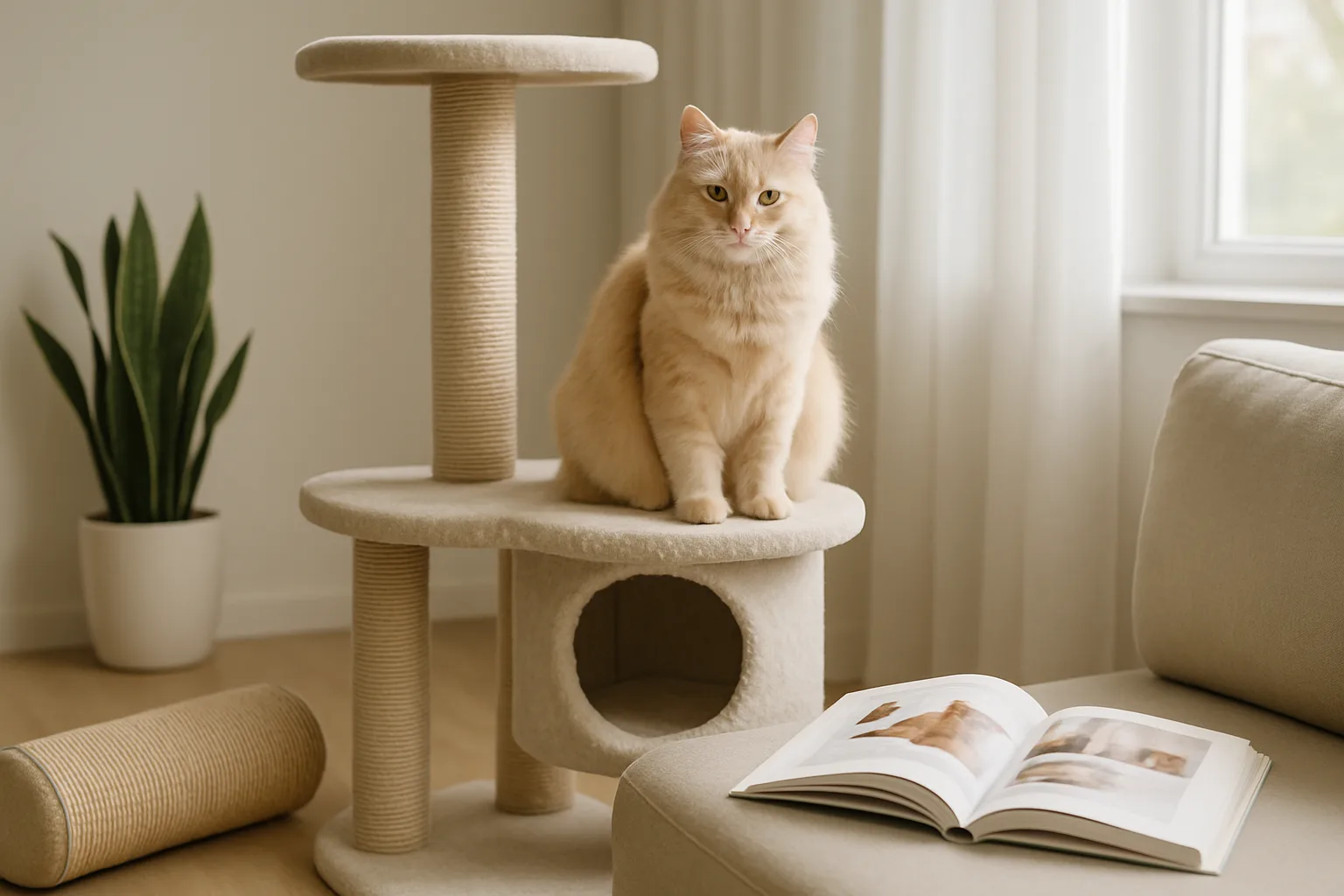
A good cat tree matches the cat who will use it, not just the room it will occupy. Notice whether your cat likes to climb, stretch, hide, watch from above, or nap in enclosed spaces. A confident climber may enjoy tall platforms, while a cautious cat may prefer low steps and broad resting spots. Kittens benefit from accessible levels that remain useful as they grow.
Check dimensions and stability before considering decorative details. Platforms should be large enough for your cat to turn around and settle comfortably. Posts need enough exposed surface for a full-body stretch, and the base should feel steady when gently pressed. If possible, look for clearly stated measurements and assembly guidance. A tall, narrow tree may be unsuitable in a busy household or for a large, energetic cat.
Think about where the tree will go and how your cat moves through the home. A perch near a window can offer a view, while a quiet corner may suit a cat seeking retreat. Consider the available floor area, nearby furniture, and whether the tree blocks a walkway. Choosing for your cat’s habits and your home’s layout makes regular use more likely than choosing by height alone.
Materials, Age and Multi-Cat Households
Once you know the shape and size that suit your cat, look closely at what the tree is made of. The covering on scratching posts matters more than most buyers expect. Tightly wound sisal rope is popular because it gives claws something firm to grip and tends to hold up to daily use. Many cats also like sisal fabric or corrugated cardboard, so if your cat already favours a particular surface at home, such as a doormat or the side of a sofa, try to match that texture. Plush carpet on platforms feels soft for napping, but carpet on posts can encourage cats to scratch similar flooring elsewhere.
Check the core materials too. Solid wood or thick, well-joined panels generally feel more secure than thin boards, and wide posts resist wobbling better than slim tubes. Look at how parts connect: sturdy bolts and threaded joints can be tightened again over time, which helps the tree stay steady for years. Replaceable posts or covers are a useful bonus, because the scratching surfaces usually wear out long before the frame does.
Matching the tree to your cat's stage of life
Young cats often want speed and challenge, so staggered platforms, dangling toys and a mix of heights keep them busy. Older cats, or cats with stiff joints, usually appreciate shorter gaps between levels, ramps or wide steps, and padded perches with raised edges that support a curled-up sleeping position. If your cat is ageing, a modest tree they can still reach comfortably is far more useful than an impressive tower they avoid. For more on designs that grow with a young cat, see our guide to cat tree features for kittens.
Choosing for more than one cat
In homes with several cats, a single tree can become a point of tension if one cat claims the top spot. Trees with multiple perches at similar heights, more than one route up and down, and separate resting areas help cats share without crowding each other. Some households find two smaller trees in different rooms work better than one large one.
Finally, plan to check the tree regularly once it is in place. Gently rock it, inspect the joints and replace worn covers before they fray. Our guide on checking cat tree stability explains what to look for, and placement tips are covered in where to put a cat tree.