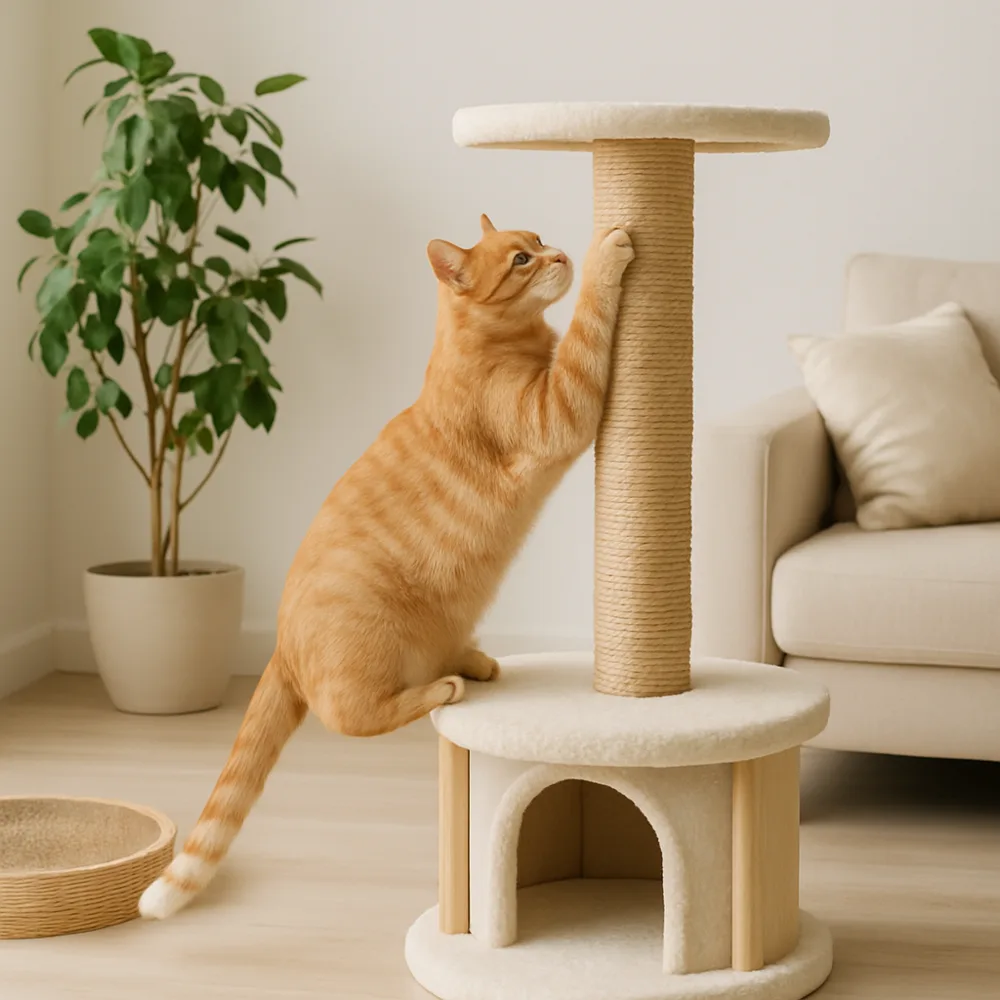
Stability starts with assembly. Lay out the parts, identify each piece, and follow the instructions in order rather than tightening everything at random. Make sure the base sits flat on the floor and that connecting hardware is snug. If a part seems misaligned, pause and correct it instead of forcing the connection. Recheck fasteners after the tree has been used for a little while.
Once assembled, test the structure gently before inviting your cat to climb. Press down on each platform and apply light side-to-side pressure to the trunk. The tree should not rock noticeably, tip, or shift across the floor. Check that posts are firmly attached and that fabric or sisal does not conceal loose joints. For a tall design, follow the manufacturer’s guidance about anchoring it to a wall.
Place the tree on a level surface and consider a nonslip mat if the floor is smooth. Keep it away from furniture that could create an awkward landing or encourage an unsafe jump. Inspect it regularly, particularly after energetic play or moving the tree. A wobble, split platform, exposed fastener, or loose rope is a reason to stop access and repair or replace the affected part. Ongoing checks help keep climbing predictable and secure.