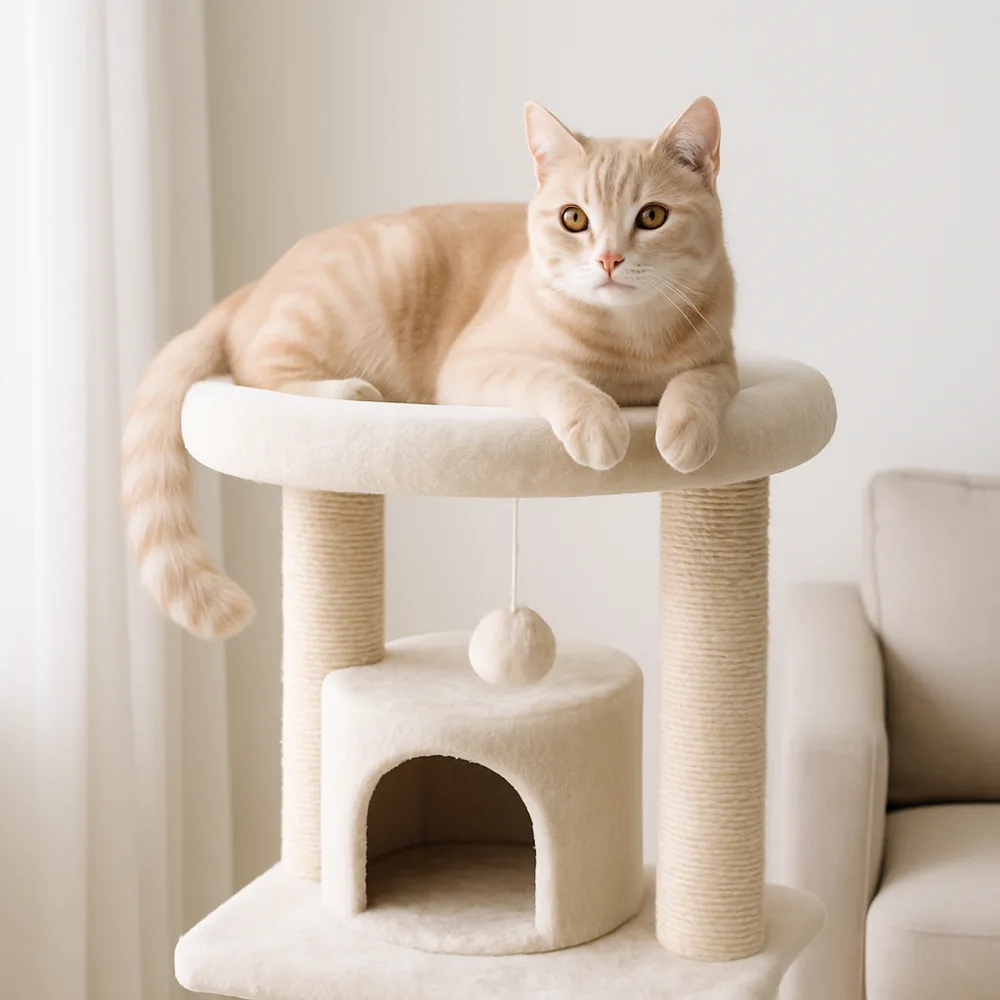
Cat trees collect fur, dust, and bits of scratch material during ordinary use. Start with a regular visual check of platforms, fabric, posts, and the base. Remove loose hair with a suitable brush or vacuum attachment, taking care around seams and small openings. Follow the maker’s care instructions, since some materials should not be soaked or treated with strong cleaners.
For a small spill, blot the area promptly with a clean cloth and use only a pet-safe cleaning method that is appropriate for the material. Test any cleaner on a hidden patch first and let surfaces dry fully before your cat returns. Avoid heavily scented products, which may discourage use or bother a sensitive cat. Wash removable covers according to their labels and make sure they are fully dry before refitting.
Cleaning is also a chance to check safety. Look for loose screws, wobbly platforms, exposed staples, frayed rope, or damaged fabric that could snag a claw. Repair or replace unsafe parts rather than covering over a structural problem. How often a tree needs attention depends on use, shedding, and household conditions. A quick routine check, combined with deeper cleaning when needed, helps keep the tree comfortable and dependable.
Dealing with Odours, Hairballs and Worn Sisal
Some messes need more than a quick brush. If a cat has been sick or had an accident on a platform, remove any solids first, then blot rather than rub so the liquid is not pushed deeper into the padding. Urine is the trickiest problem because carpet-covered boards and foam soak it up, and a lingering smell can encourage a cat to mark the same spot again. Enzyme-based cleaners sold for pet stains are designed to break down the compounds behind the odour, but check that the product suits the fabric and follow its label closely. If the smell has reached the board underneath, replacing that platform or the whole tree is often more realistic than repeated scrubbing.
Hairballs and food crumbs tend to settle in cubbies and hammocks, where cats like to curl up and groom. A lint roller or a damp rubber glove pulls fur out of carpet fibres surprisingly well, and a crevice tool reaches into the corners of enclosed beds. Shake out or launder any loose cushions on the same schedule as your cat's other bedding.
When sisal rope looks tired
Shredded sisal is a sign the tree is doing its job, so a frayed post is not automatically dirty or unsafe. Trim long loose strands with scissors so claws are less likely to catch, and vacuum the fibres that collect around the base. Once the rope is worn down to the core or starts to unwind, it is time to rewrap the post or fit a replacement if the maker offers one. Keeping a good scratching surface available matters, because a cat without one may turn to furniture instead. Our guide on where to put a cat tree also covers how placement affects how much a post gets used.
Small habits that save effort
- Place a washable mat under the base to catch litter, fibres and spilled food.
- Brush your cat regularly during shedding seasons to reduce fur build-up on the tree.
- Keep the tree away from feeding areas and litter trays where possible.
- After a deep clean, rub a familiar blanket over the platforms so the tree smells like home again.
If you notice your cat suddenly avoiding a freshly cleaned tree, or soiling it repeatedly, a vet can help rule out health or stress-related causes. While you clean, it is worth running through a cat tree stability check as well.