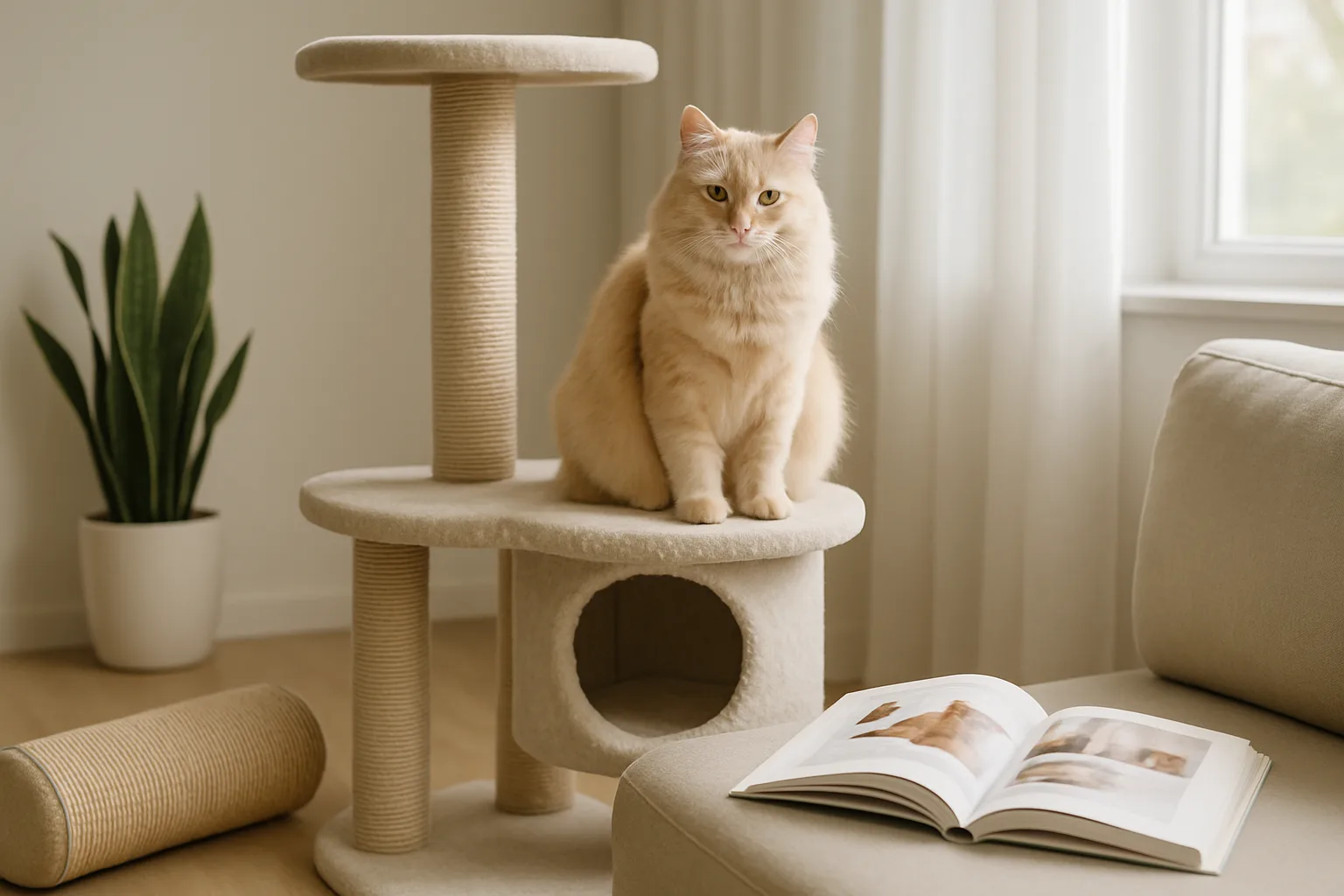
Watching the outdoors can offer indoor cats changing sights and sounds throughout the day. A cat tree beside a window or a purpose-made perch can create a comfortable lookout. Choose a stable surface that gives your cat room to sit or lie down, and make sure access does not require a risky leap from another piece of furniture. Keep the area welcoming but uncluttered.
Check the window itself before setting up a perch. Screens should be secure and in good condition, and a window should not be opened wider than can be safely managed. Never assume a screen will hold a cat leaning against it. Avoid placing a resting spot where direct sun could make it uncomfortably hot, and ensure the cat can leave the perch easily if they become warm or startled.
Not every cat wants a busy view. Outdoor animals or loud activity may excite or worry some cats, so observe their reactions. If your cat becomes distressed, close the view temporarily or move the perch to a calmer window. Keep window access supervised when safety is uncertain. A good lookout offers stimulation and choice without compromising secure indoor living.
Setting Up a Lookout Your Cat Will Actually Use
A perch only works if your cat chooses it, so think about the details that make a window spot feel inviting over the long term. Many cats prefer a lookout that sits slightly above human eye level, because height gives them a sense of security while they watch. If you are using a cat tree, a model with a platform close to the sill and a solid base suits most homes; our guide to choosing a cat tree that fits your cat covers size and platform depth in more detail.
Suction-cup and sill-mounted perches
Window-mounted hammocks and shelves save floor space, but they need regular checks. Suction cups can loosen with temperature changes, cleaning products or simple wear, and sill brackets may shift if screws work loose. Press firmly on the perch every week or so, and pay attention to the weight rating stated by the manufacturer. Older, heavier or less agile cats are usually better served by a floor-standing option with a gentle route up.
Comfort through the seasons
Windows change character across the year. In winter, glass can feel cold and draughty, so a washable fleece pad or folded blanket makes the perch more appealing. In summer, the same spot may become too warm by midday; a perch on a shaded side of the house, or a light blind you can lower partly, keeps the view without the heat.
Making the view more interesting
Some owners add a bird feeder or a few plants outside the window to bring movement into view. If you do, place feeders far enough from the glass to avoid bird strikes, and watch whether the activity entertains your cat or leaves them frustrated and tense. Signs of frustration include tail lashing, chattering that turns into pacing, or redirected swatting at other pets.
Fitting the perch into daily routine
Window watching works best as one part of a varied day. Pair it with short play sessions, scratching opportunities and quiet resting places elsewhere. Thinking about where to put a cat tree in relation to windows, radiators and household traffic helps you create a lookout that is safe, calm and genuinely used.