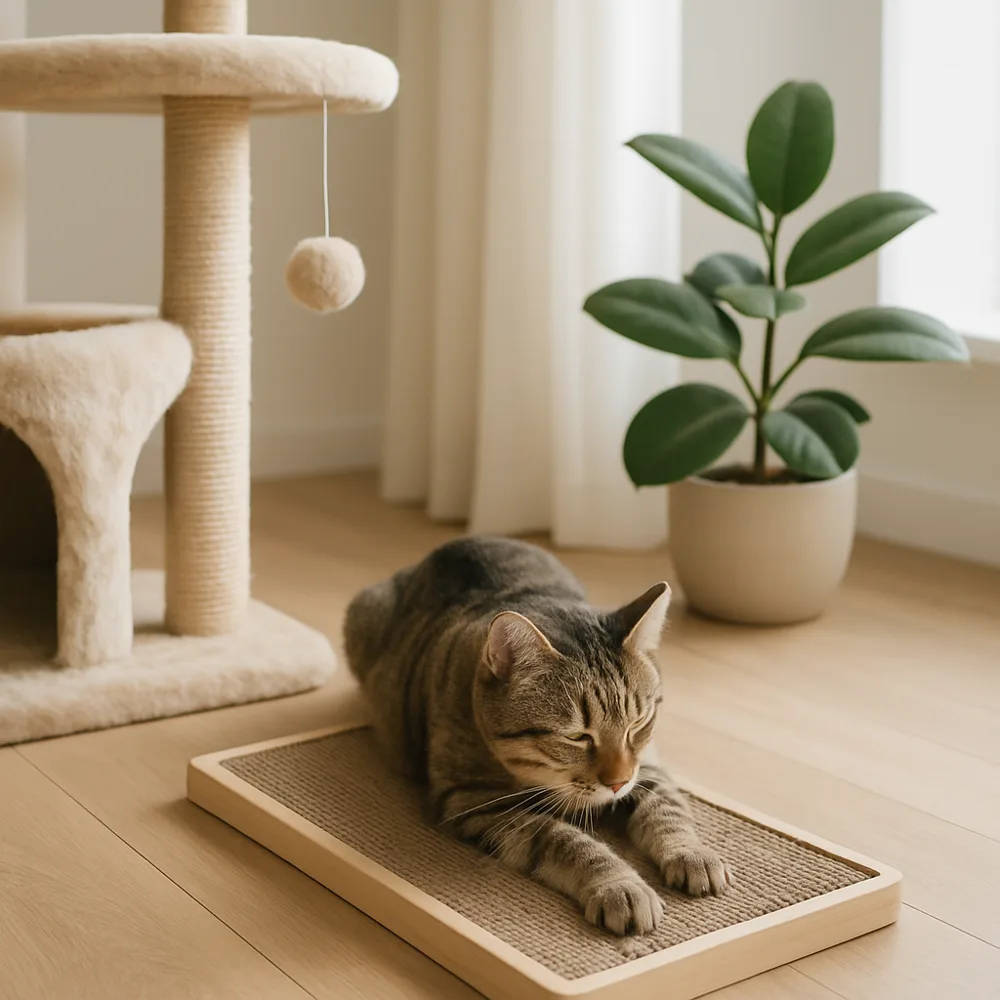
In a home with several cats, one attractive perch can become a point of competition. Look for a tree with multiple resting places at different heights so cats can share the structure without needing to occupy the same shelf. Separate beds and hideaways give each cat an option to rest alone. The best layout depends on your cats’ relationships, sizes, and preferred spots.
Consider routes as well as destinations. A design with more than one way on and off can reduce the chance that one cat blocks another’s path. Broad platforms and sturdy steps make passing easier, while a stable base helps the tree withstand frequent use. Check the dimensions of sleeping areas and posts for the largest cat in the household. Regularly inspect joints and surfaces because higher use can mean more wear.
A cat tree is only one part of a shared environment. Provide other resting places and scratchers around the home so every cat has choices. Place resources where one animal cannot easily guard all access, and watch for signs of tension such as staring, blocking, or avoiding the tree. If a cat rarely uses the structure, add a separate perch or move a scratcher to a more welcoming location. Multiple options help keep shared spaces comfortable.