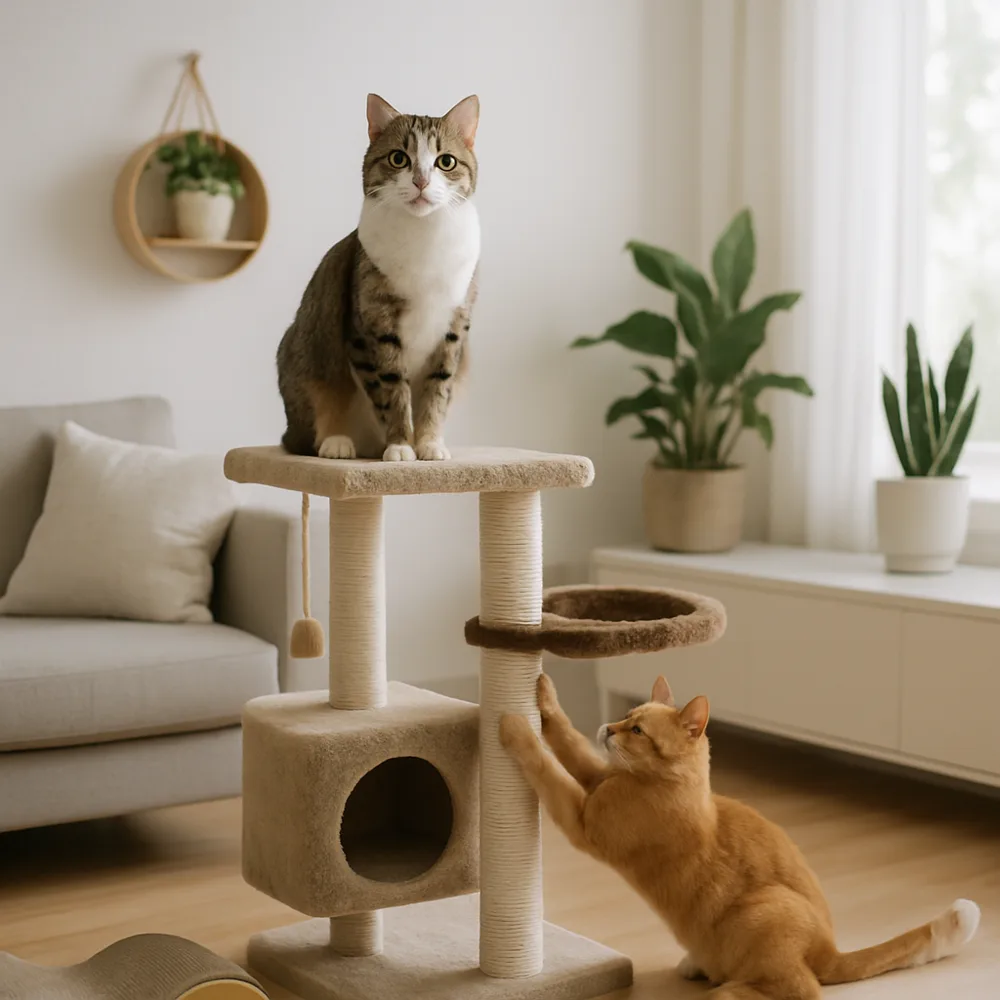
Older cats may still enjoy a high view, but jumping to reach it can become harder with age. Choose a tree with low platforms, gentle transitions, and a route that does not require one long leap. Broad steps can offer a place to pause along the way. If your cat already favors a particular height, look for a design that provides a similar view with easier access.
Stability and comfort deserve extra attention. A firm base helps a cat feel secure, while soft, supportive resting areas can make a perch more inviting. Check that sleeping platforms are roomy enough for your cat to settle without balancing on an edge. Keep the tree on a level surface and follow any instructions about anchoring tall structures. A nearby ramp or low piece of furniture may help connect the tree to the rest of the room.
Observe how your cat uses the setup rather than expecting them to adapt to it. Put a favorite blanket on an accessible level and keep food, water, and litter arrangements convenient without crowding the tree. If your cat is suddenly reluctant to jump or climb, discuss the change with a veterinarian, since new mobility problems can have health causes. A cat tree can enrich a senior cat’s routine, but ease and choice should come first.