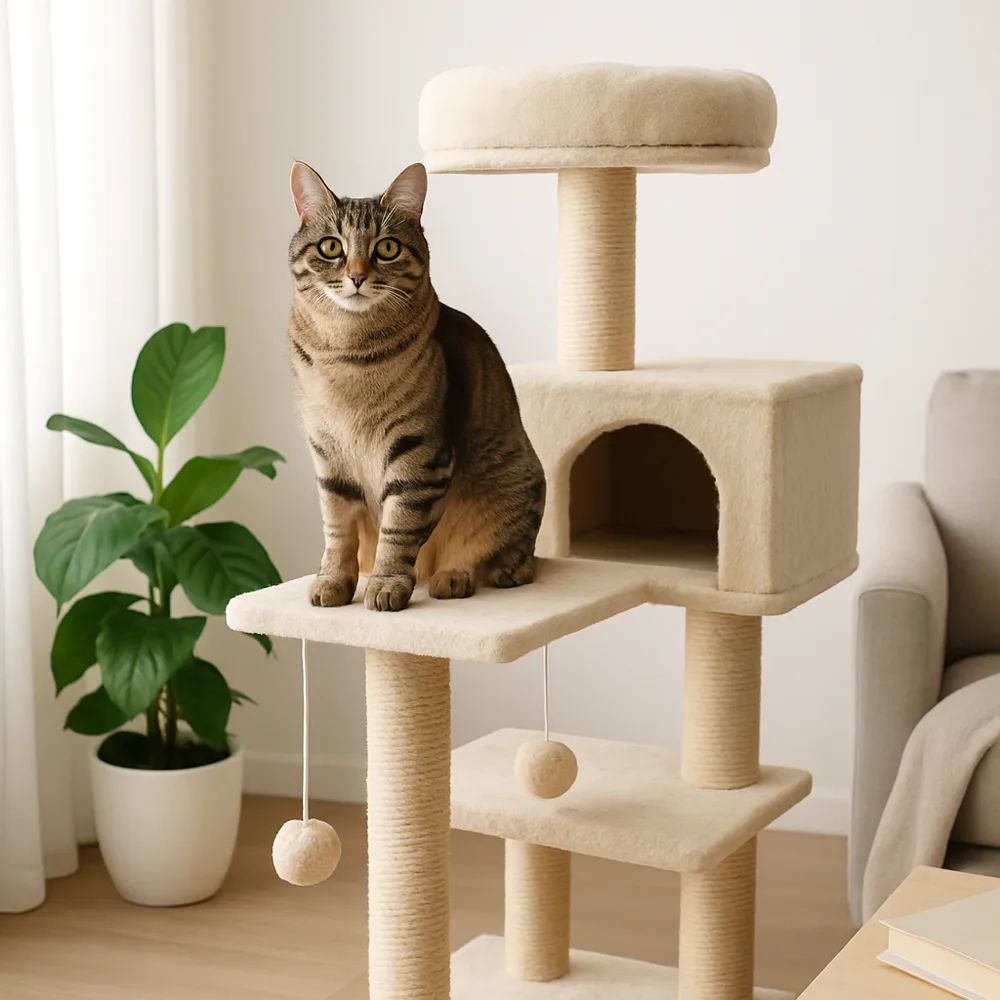
Kittens are curious, quick, and still learning how to judge a jump. Choose a tree with a broad, steady base and steps that are close enough together for easy movement. Low platforms give a kitten places to pause, while a small hideaway or soft resting area offers a quiet break. Very tall designs can be tempting, but height is less important than safe access and a structure that does not wobble.
Look for surfaces that provide grip and posts where a kitten can practice scratching. Avoid loose cords, dangling components, sharp edges, and gaps that could catch a paw or collar. Check that any enclosed cubby has an easy entrance and is large enough for comfortable movement. As your kitten grows, reassess the size of platforms and the sturdiness of the whole structure.
Introduce the tree gradually. Set it in a calm, familiar area and allow your kitten to explore without being placed on a high perch. A toy or a few pieces of the usual food can encourage investigation, but keep rewards on reachable levels. Supervise early play and redirect rough chewing or climbing on unstable parts. The goal is to make the tree a positive place to practice natural behaviors, not a challenge the kitten must conquer.