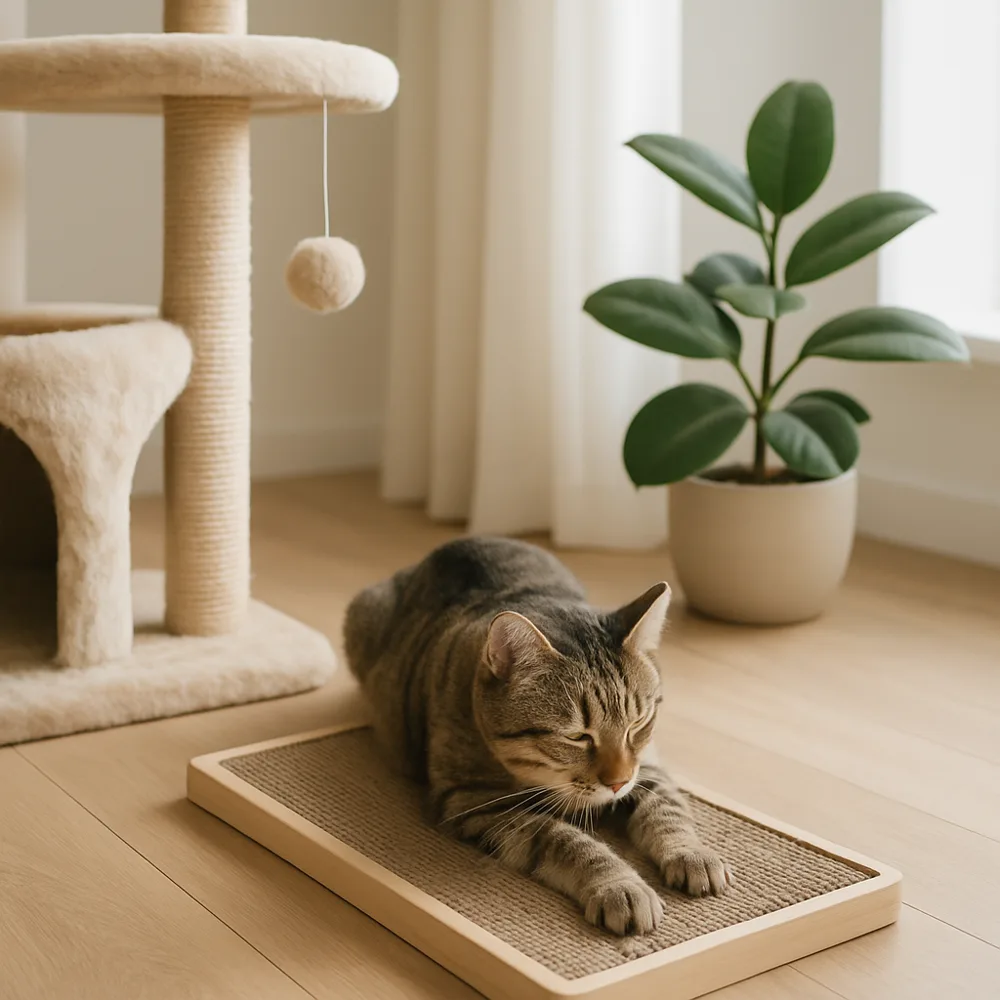
Many cats seek elevated places where they can watch a room without being in the middle of activity. Height can provide a sense of security and a useful view of people, other pets, and the surroundings. A cat tree turns this preference into an accessible resting option, especially in a home where shelves and cabinets are not suitable for climbing.
Not every cat wants the highest possible perch. A cautious cat may prefer a low hideaway, while an outgoing cat might choose a top platform near a window. Give your cat several comfortable options and observe where they settle. Make sure routes up and down are manageable and that the structure is stable. In a shared home, additional perches can help reduce competition over a single favored spot.
Elevated resting spaces should complement, not replace, other resources. Keep food, water, litter, and social contact accessible at floor level, and offer quiet beds or hiding places too. A cat should be able to leave a perch without being trapped by a person or another pet. By offering safe height alongside ground-level choices, you give your cat more control over how and where they relax.
Reading Your Cat's Vertical Preferences
Cats tend to fall into loose patterns when it comes to height. Some are natural climbers who head straight for the top of a bookcase, while others prefer to stay closer to the floor, tucked under furniture or curled on a low cushion. Neither is wrong. Watching where your cat chooses to rest, nap and observe tells you a lot about how to arrange perches so they actually get used.
Why height feels safe
In the wild, small cats are both hunters and potential prey. A raised position lets them scan for movement, spot approaching animals early and stay out of reach of larger creatures. Indoors, the same instinct shows up as a preference for spots where a cat can see a doorway or a busy corridor without being underfoot. Height also helps with temperature: warm air rises, and a sunny perch near a window is often the cosiest place in the room.
Height and social life in multi-cat homes
When several cats share a home, vertical space works like extra square footage. A cat can claim a high shelf while another rests below, and both can coexist without direct confrontation. It is common for a more confident cat to take the top spot, so offering several perches at similar heights, ideally in different rooms, helps prevent one cat from controlling the best view. Make sure no perch becomes a dead end where a cat can be cornered.
Adjusting for age and health
Kittens often leap before they judge distances well, so lower platforms and wide steps suit them; our guide to cat tree features for kittens covers this in more detail. Older cats or those with stiff joints may still want a view but struggle with big jumps. Ramps, staggered levels and a step stool beside a favourite window can keep high places within reach. If your cat suddenly stops climbing, it can be a sign of discomfort, so it is worth mentioning to your vet.
Placing perches well
A perch is only appealing if it is somewhere worth watching from. Positions near windows, overlooking family areas or close to where people spend the evening tend to be popular. For practical ideas, see where to put a cat tree, and always check that the structure is stable before your cat trusts it with a leap.