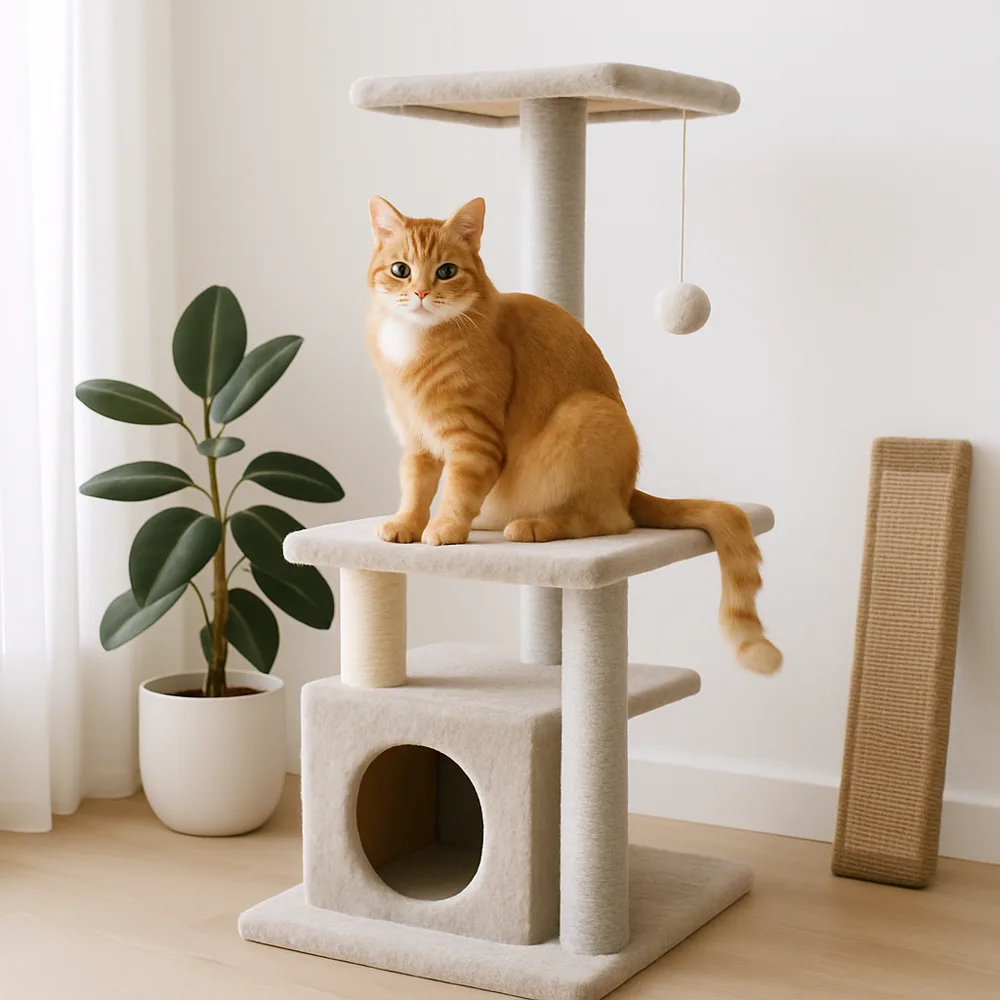
A cat tree does not need to be a special destination reserved for playtime. Keep it accessible and let your cat choose when to climb, scratch, or rest. A predictable routine can include a short play session near the tree, followed by a meal or quiet downtime. The sequence gives active cats an outlet while leaving plenty of room for independent exploration.
Notice which levels your cat prefers and whether they use the scratchers. Move a toy along a low platform or encourage a stretch beside a post, but do not force your cat onto a perch. Offer different kinds of play on different days, and rotate a few safe toys to maintain interest. For a timid cat, calm company nearby may be enough encouragement; a confident cat may enjoy a more active game.
Keep the structure in good condition as part of the routine. A quick glance for wobble, loose material, or debris helps you catch issues before they become disruptive. Adjust the setup as your cat ages or their preferences change. The aim is not to make a cat use every feature, but to provide dependable choices that support movement, scratching, resting, and a sense of control.
Fitting the Tree Into Your Cat's Day
Cats are crepuscular by nature, which means many are most active around dawn and dusk. Those windows are often the best time for a short burst of play near the tree, because you are working with your cat's natural energy rather than against it. A few minutes of wand-toy chasing up and around the lower platforms, ending with a successful "catch", mimics the hunt-and-capture sequence that helps many cats settle afterwards. Following that with a meal completes the pattern and can make evenings and early mornings calmer for everyone.
Small habits that make a difference
- Reward natural use. When your cat scratches a post or hops onto a perch on their own, a quiet word or a small treat reinforces the habit without turning it into a demand.
- Redirect, don't scold. If your cat scratches furniture, gently move them or a toy to the nearest scratching surface. Placing the tree close to where scratching already happens helps, and our guide on where to put a cat tree covers placement in more detail.
- Use scent and texture. Rubbing a soft cloth on your cat's cheeks and then on a perch can make a new tree feel familiar. Some cats also respond to a light sprinkle of catnip or silvervine, though not every cat reacts.
- Keep resting spots undisturbed. If your cat naps on a top perch, treat it as their space. Being woken there repeatedly can make a cat avoid it.
A weekly check-in
Alongside the quick daily glance, set aside a few minutes once a week for a closer look. Tighten any bolts that have worked loose, vacuum fur from carpeted platforms, and check that sisal rope is not fraying into long strands that claws could snag on. Our checklist for checking cat tree stability is a useful reference. This is also a good moment to rotate toys, swapping a dangling toy for a different one so the tree keeps offering something new.
Routines should shift with life stages. Kittens often need extra supervision and lower, wider platforms, while older cats may prefer ramps, steps or a cosy perch at mid-height over a leap to the top. If you notice your cat suddenly avoiding heights they once enjoyed, or straining to jump, it is worth mentioning to your vet, as changes in climbing can sometimes reflect joint discomfort or other health issues.